

Europe is heading towards an energy crisis. The potential consequences of this are not limited to higher utility bills – bad as they alone would be for European voters, who have already suffered stagnant living standards for decades. In fact, even the most likely baseline scenario for this winter probably means inflationary pressures, reduced disposable income and yet more damage to Europe’s already battered global industrial competitiveness. And if the continent gets even a little unlucky with the weather, mandated blackouts, a visible hit to economic output, worsening fiscal problems, and job losses, appear the likely outcome. Very unlucky and we are at serious risk of a full-blown catastrophe. Unless Europe is uncommonly fortunate, this winter will also worsen the EU’s geopolitical position at just the moment it faces crises of varying severities in its relations with Russia, China and the United States.
If and when this crisis hits, it will be tempting to look for a single decision, leader or point of failure to blame. Everybody will use the opportunity to blame the policy or person they were already against. The libertarian right will likely blame it on EU environmental regulation and the push for renewable energy. The EU establishment will probably blame Vladimir Putin and Russia. The left will be inclined to blame a reliance on fossil fuels. Media centrists will likely blame Donald Trump and the disruptive effects of his decision to go to war with Iran. Many in the alternative media space will doubtless blame the Transatlantic establishment’s appetite for wars against Russia and Iran.
While there will be a kernel of truth in each of these conclusions, those who backward-fit events to their existing narrative are not to be taken seriously. If it does happen, such a European energy crisis will be the culmination of a complex interaction of policy decisions overlaid with multiple exogenous shocks and internal politico-economic feedback loops. To understand what’s coming down the pipe, therefore, we must look at the system in detail.
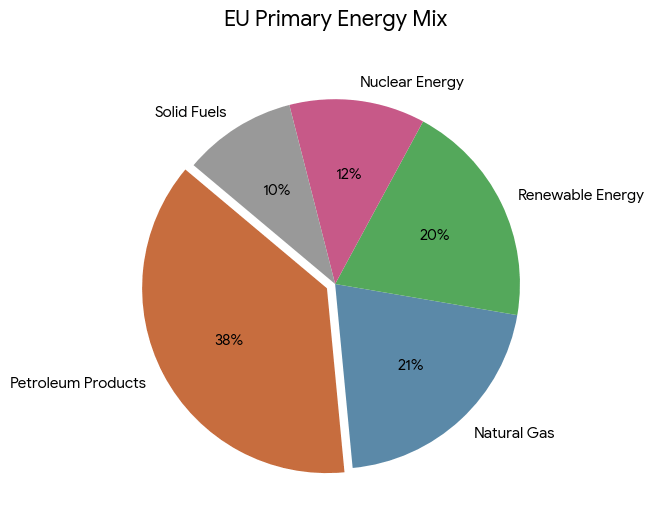
Source: Eurostat
Natural gas accounts for 20-24% of the European Union’s total primary energy consumption, behind oil (34%), but far ahead of renewables (18%), nuclear (12%) and coal (11%). In terms of energy production, natural gas is used in two main ways. First, it generates around a fifth of Europe’s electricity. Secondly, it provides 40-42% of Europe’s heating. Importantly, there is a massive increase in gas use during the winter. While gas accounts for some 20% of Europe’s electricity for the year as a whole, in the winter months it accounts for more than a quarter of production. And because space heating (living rooms, offices, etc) is almost entirely seasonal, natural gas consumption for warming buildings increases 300-400% in winter.
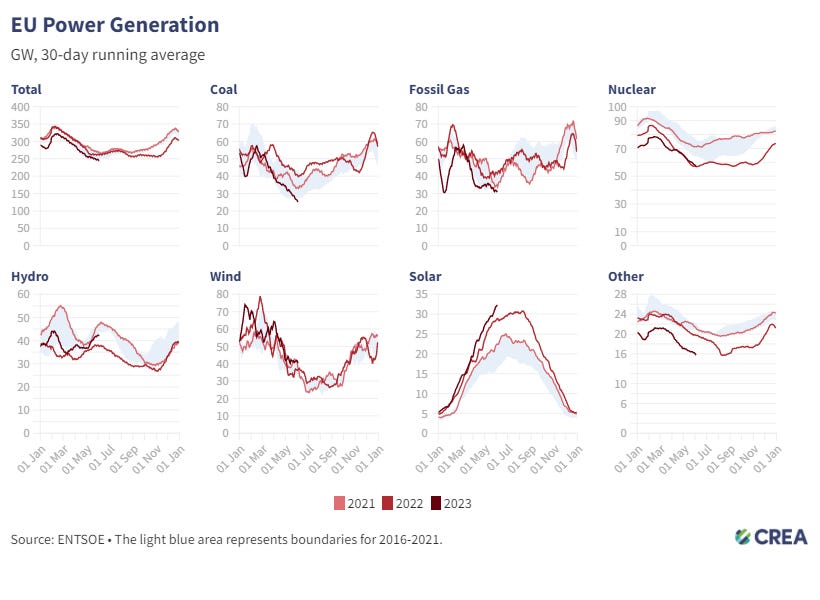
Note the steep spikes in natural gas (fossil gas in the chart) on the far left and right ends of the graph — in other words, the winter months.
Gas is also a crucial form of immediately dispatchable energy in EU grid systems. Electricity demand is not constant. Spikes occur. These might be very short (for instance when everybody turns on their kettles to make coffee during the commercial breaks of popular primetime soap operas) or longer (during sudden cold snaps in the weather). When they happen, the grid needs electricity to meet this higher demand.
Wind and solar power either produce or they do not, and battery storage is nowhere near enough to cover demand spikes. Hydroelectric dams are incredibly fast — able to release water to produce peak electricity in under ten minutes — but they are limited by two factors. First, the weather: hot, dry summers can leave water levels low, while frozen mountain reservoirs can restrict flow. And secondly, geography: hydroelectric facilities cannot be set up just anywhere.
Nuclear power is designed to run continuously at 100% of capacity to provide steady baseload. Plants cannot be easily or safely cycled up and down to match minute-by-minute spikes in demand. Also, much of Europe – most famously Germany – has entirely phased out its nuclear power, and those countries with large remaining fleets of nuclear power stations suffer from structural aging and maintenance bottlenecks. Nuclear power cannot, therefore, realistically provide much immediately dispatchable electricity.
Beyond niche options like biomass power stations (which burn wood pellets or biogas to provide electricity), the only real options for Europe to deal with electricity demand spikes are coal and gas. The problem with coal, beyond European taxation and regulation of coal plants being punitive, is that it can take between six and 24 hours to spin up to peak generation from a standing start. This is no good for meeting sudden grid fluctuations. Europe is thus left relying on natural gas to balance its grid by providing peak-load, dispatchable energy.
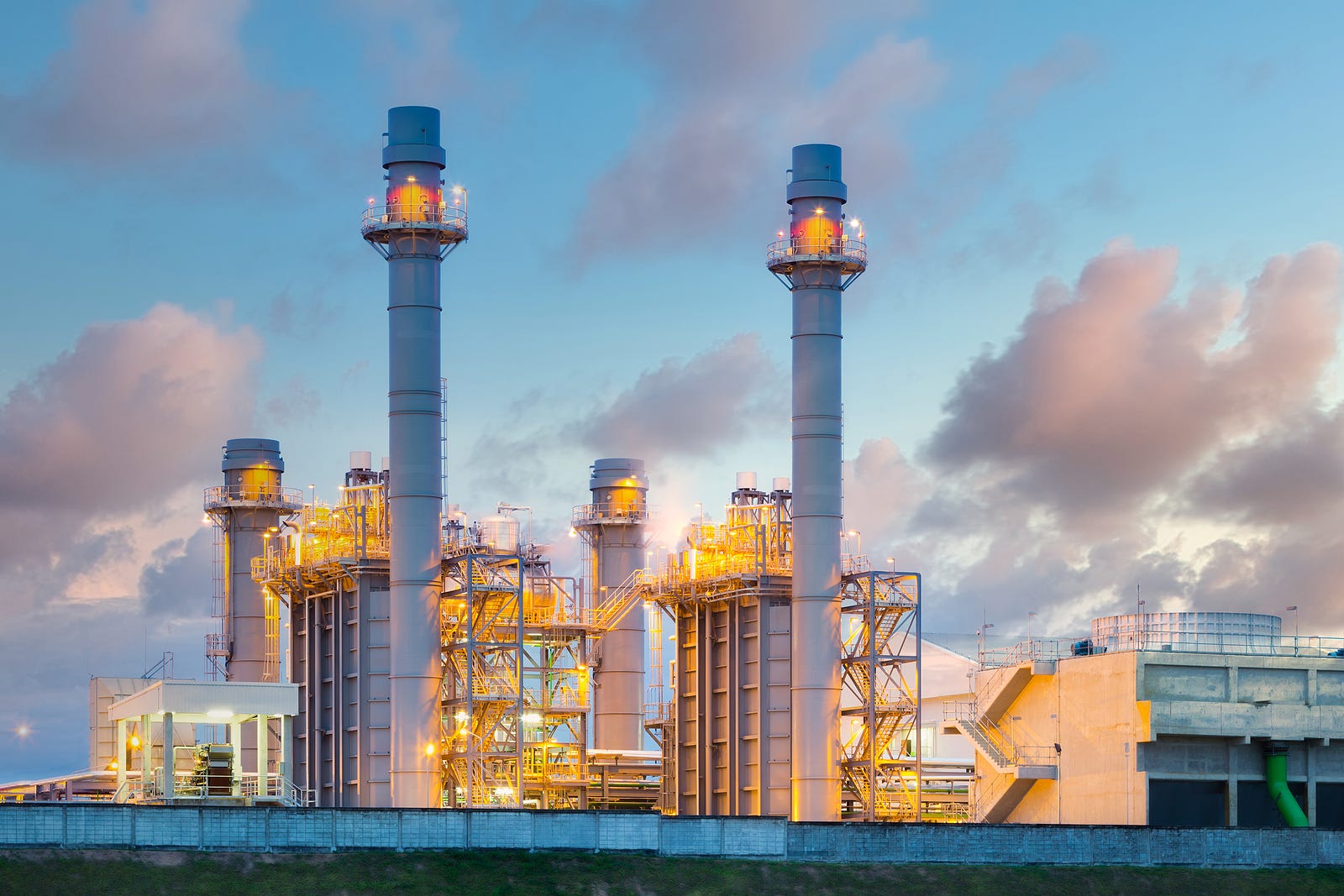
Natural gas power stations are the only realistic option for the EU to cover electricity demand spikes.
Before 2022, this was not a problem. Europe enjoyed stable long-term contracts for cheap natural gas with Russia. Once a pipeline has been built, transporting gas through it is extremely cheap. Secondly, it seems that Moscow was at least as interested in long-term stability as price: it preferred Europe to sign multi-year take-or-pay contracts, where Europe would guarantee the purchase of a certain minimum over a long period in exchange for massive volume discounts. Finally, the prices were linked to a long-term average of the oil price, rather than being decided on a volatile futures market.
Overall, this meant that before 2022, Europe was paying a wholesale gas price of as little as EUR 15 and usually no more than EUR 20 per megawatt-hour (or $4.50 per British thermal unit), and with spare capacity to push more into the system.
Europe’s reaction to Russia’s invasion of Ukraine in February 2022 changed matters completely. First of all, LNG is fundamentally more expensive than pipeline gas. It must be cooled to extremely low temperatures and pressurised at specialised export terminals. It is then loaded onto extremely expensive, purpose-built ships (of which there are very few in the world), to transport the LNG across the Atlantic or Pacific to specialised import terminals, where it is regasified. This means that even if there was far plentiful LNG, it would be more highly priced than pipeline gas, all things being equal: the marginal cost of production for LNG is simply higher.
The second problem is that rather than long-term contracts linked to a average of the price of oil over the preceding nine months that smoothed fluctuations, LNG is traded on speculative futures markets like the Dutch TTF natural gas trading hub. This means that prices – like those in the oil futures market – respond almost immediately to crises, fears about supplies, capital flows or shifts in traders’ animal spirits. Prices are thus far more volatile. Finally, Europe is competing against giant buyers in North-East Asia, like Japan, South Korea and China, all of whom also need to increase supply during the winter months, and who buy LNG through long-term, 10-to-20-year contracts that often grant them legal priority over specific ships. For these reasons Europe’s base cost of natural gas has permanently doubled – and has on a few occasions spiked wildly from there.
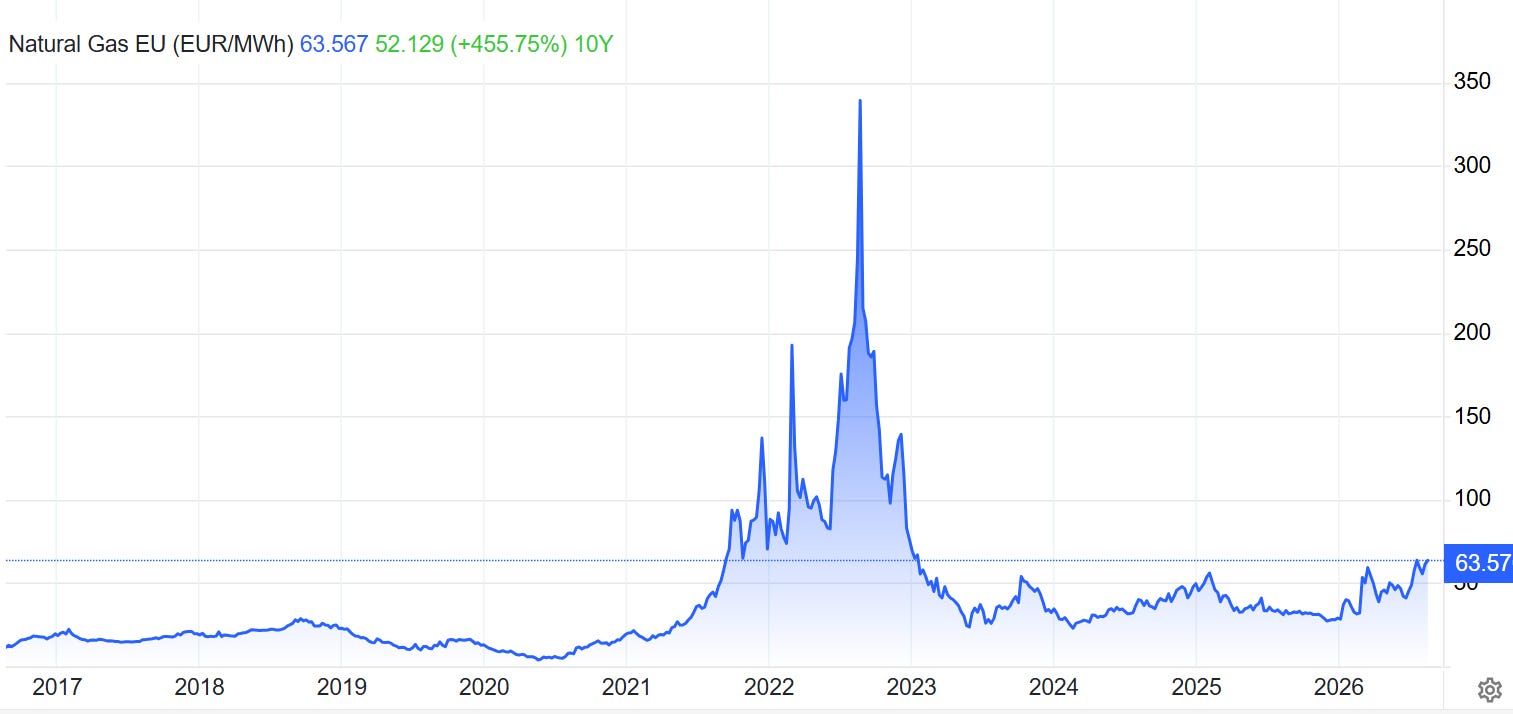
As the chart shows, the EU’s decision to switch from pipeline natural gas imports to LNG imports has led to more expensive and, just as importantly, much more volatile prices
The political will and rapid build-out of LNG regasification facilities demonstrated by the EU to achieve this switch was impressive. Nevertheless, trading pipeline natural gas for LNG was a structural economic shock whose scale is massively underreported (perhaps because it would raise uncomfortable questions about the wisdom of the EU policy toward Russia). While the political motivations and comprehensive economic details are beyond the scope of this analysis, there have been four broad effects. First, it has accelerated the process of deindustrialisation that had already started in the EU. Higher energy prices make energy-intensive industries – like glass-making, chemicals and fertilisers – unprofitable, and negatively affect the global competitiveness of others.
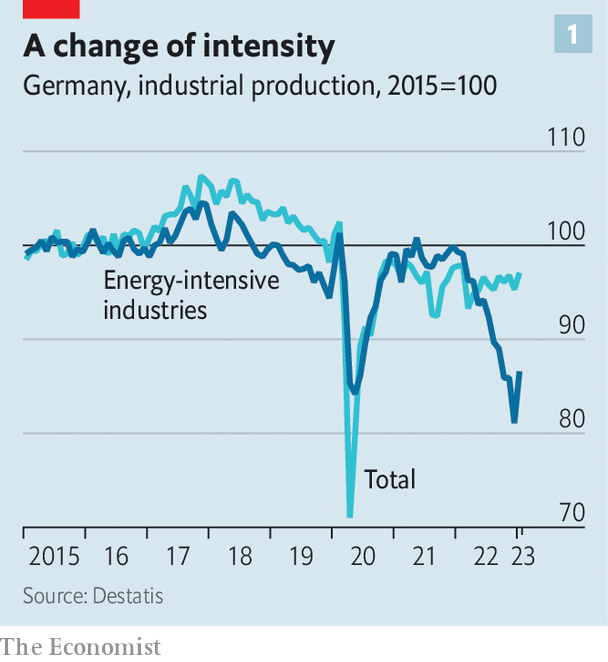
Source: Destatis, The Economist. Germany’s energy intensive industries became untennable after the switch from pipeline gas to LNG.
Secondly, it has drawn EU nations into a tax-subsidy trap. In order to stave off the worst of this deindustrialisation, many EU governments have subsidised energy, hiding the true cost of expensive gas while forestalling the formation of sufficient political will to solve the underlying problem. This increases the debt or tax burdens in these countries. Thirdly, it has led to a wealth drain. Hundreds of billions of euros that would once have stayed within the European economy to fund domestic growth are now being sent to countries like Qatar and the US to pay for more expensive LNG. Finally, it has stoked inflation. Higher gas prices mean higher utility bills, higher factory prices and higher business costs. This demands higher interest rates than would ordinarily have been the case, choking economic growth.
These effects have had a negative effect on Eurozone growth and unemployment levels. Importantly, they have also left the EU vulnerable to exactly the type of crisis that appears to be emerging.
The central problem facing Europe is that it does not have the infrastructure capacity to cover all its winter needs. It therefore must import more than it needs in summer. This excess is stored in giant underground salt caverns, aquifers or depleted gas fields to be released in winter to supplement the import system when it is already running at maximum.
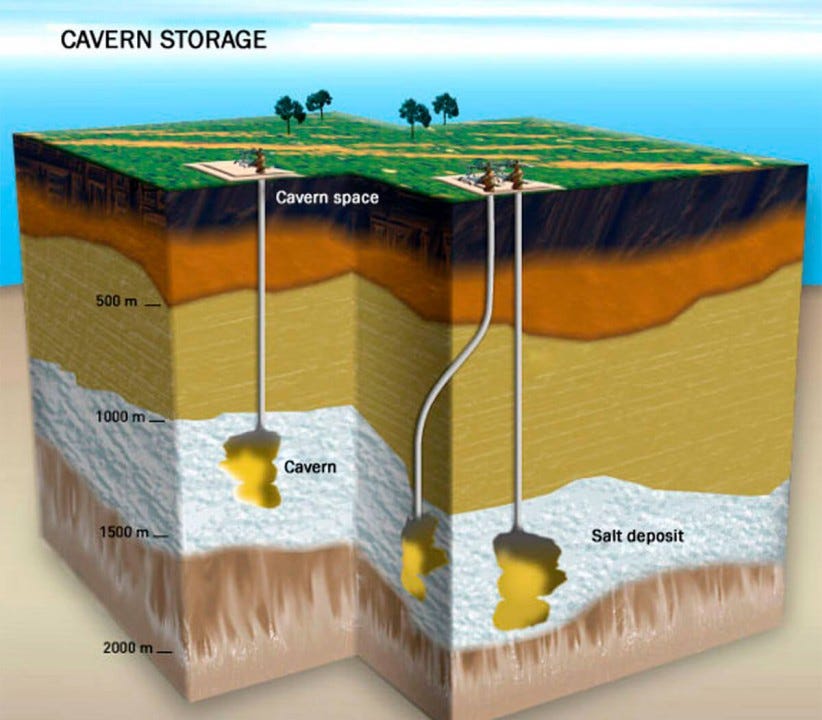
Over the last three years, this has not been a problem. Natural gas is cheaper in the summer than the winter. This gives private traders and consumers an economic incentive to buy gas in the summer, store it, and then lock in contracts to sell in the winter when it is more expensive. The EU has thus been able to fill its reserves to beyond the 90% of capacity that it mandated through private-sector, market mechanisms.
The Iran War has broken this system. In response to the US attack, Iran shut the Strait of Hormuz and attacked Qatar’s giant LNG facilities at the Ras Laffan Industrial City complex. Although a small amount of crude oil and other commodities have been able to leak through, LNG facilities are vulnerable to catastrophic cascade failures, prompting QatarEnergy to undertake a complete shut down of the entire Ras Laffan complex. This removed 20% of the global LNG supply overnight. Traders have responded to this, pushing the price at the Dutch TTF trading hub up to EUR 62 per MWh.
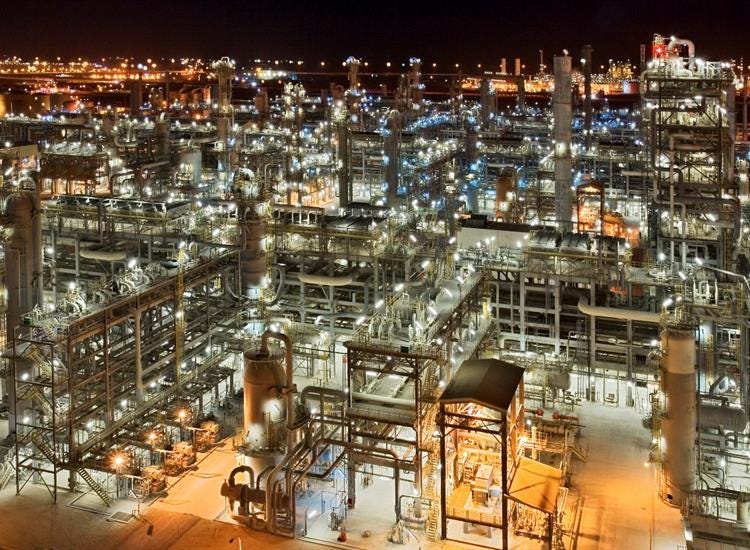
Qatar Energy’s giant Ras Laffan LNG hub.
Importantly, it has also pushed the market into backwardation. This is a phenomenon where futures contracts today are more expensive than longer-dated contracts (i.e. contracts bought or sold today that require delivery of gas at a later date). Without the usual arbitrage of buying cheaply in the summer and being able to locking higher prices for the winter, capital has walked away. No trader would buy gas at a high price today only to sell it at a lower price in three or six months. Thus, Europe’s gas storage is simply not filling quickly enough to reach the legally mandated 90% full. In fact, it is touch and go whether it will even reach the 80% the EU has reduced the target to for this year.
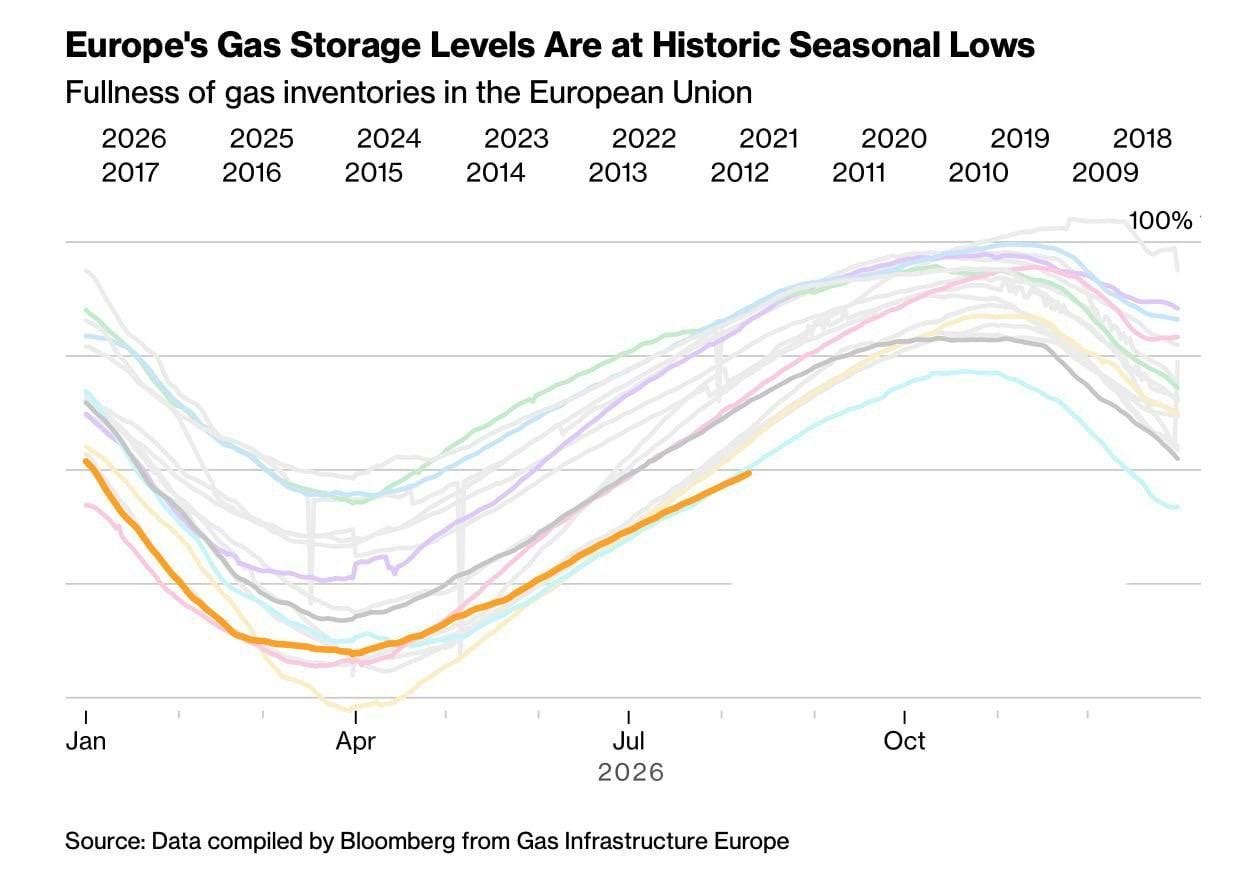
Source: Gas Infrastructure Europe, Bloomberg. Europe is far below its average level of reserves for this time of year, and has no chance of hitting the legally mandated 90% reserves capacity level by 1 November. Even the temporarily relaxed level of 80% is looking touch and go.
The obvious solution might seem to be for the public sector to step in to replace the temporarily reluctant private sector actors. The experience of 2022 has put the EU off this solution. After Russia invaded Ukraine in February 2022, gas supplies to Europe collapsed. Panicked that they would not be able to build sufficient reserves over the summer, governments stepped in and handed tens of billions of euros to proxies to buy and store enough for the winter. Prices exploded – to a record of over EUR 300 per megawatt-hour, ten times even the normal LNG price (see Dutch TTF natural price chart, above).
Research by the German Ministry for Economic Affairs and Climate Action suggests that repeating government-subsidised buying would instantly lock up the global spot market, triggering an immediate pricing spiral toward winter, costing billions in taxpayer money while actually worsening the near-term supply crunch.
It seems, therefore, that the EU is trapped. Yet the situation is not evenly spread across the EU. Excellent research by BNE IntelliNews has shown that some EU countries are in fact doing well. For instance, Poland’s reserves are around 89% full and Italy’s are around 79% (figures from roughly a week ago). Both nations are well on course to hit the 90% level mandated in EU law. The problem is in the Central and Northwestern European countries. The Netherlands is only around 42% full, Slovakia around 45-47%, and the big elephant in the room, Germany, with only around 50% of its tanks filled.
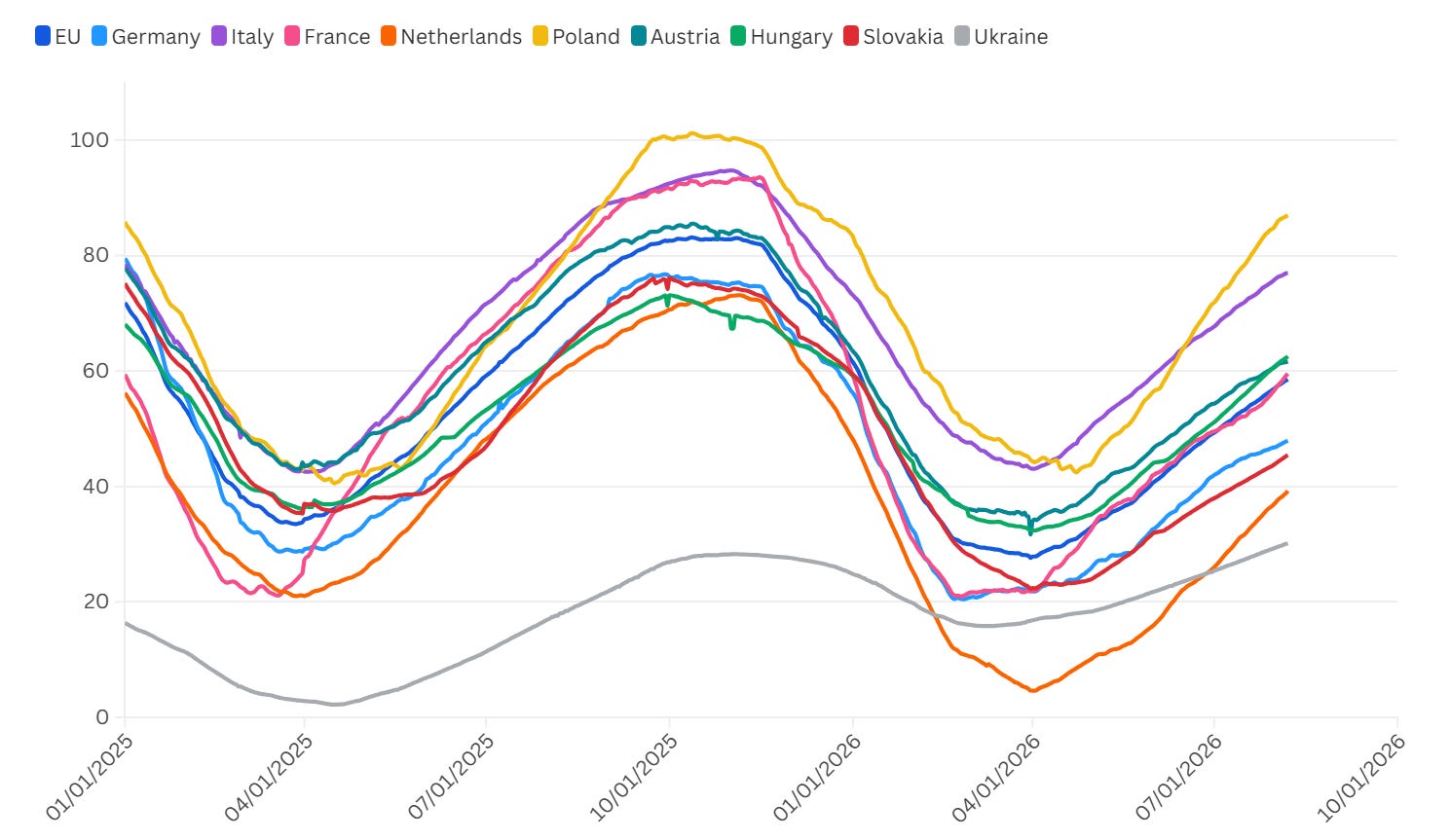
Source: BNE Intellinews
This should be concerning given the scale of Germany’s needs. Furthermore, while Italy stores its gas reserves in depleted gas reservoirs, Germany does so in salt caverns. The difference matters. The weakness of the depleted-field storage system Italy uses is that they cannot push large amounts of gas into the system rapidly if a cold spell hits. They make up for this in their ability to store vast amounts of gas that protects the country from prolonged cold spells.
The reverse is true of the German salt-cavern system. Because of the high pressure at which the gas is stored, the German authorities can blast out large volumes with extreme rapidity to respond quickly to sudden spikes in demand. The downside is that they are built for speed, not scale. This means that German reserves can quickly deplete during prolonged cold waves. If global LNG shipments slow down for even a few weeks, the country can suddenly find itself with worryingly little runway to spare. This fact should add an exclamation mark to the low levels of storage heading into the winter.
Where does all this leave Europe? Analysts now recognise that it is a mathematical impossibility for the EU as a whole to reach the legally mandated target of filling underground storage to 90% by 1 November. The EU has responded by temporarily relaxing the target to 80%, but at the current rates of injection it seems that the bloc will barely make that. Indeed, with no sign of a US-Iran peace deal, and escalation in the region eminently possible, it would seem that just falling short of the relaxed target is now a possibility, too. Indeed, the financial press and specialist journal consensus that a colder-than-average winter could rapidly deplete these thinner buffers is solid enough for the fear to have started leaking out into the mainstream press.
What is this going to look like in practice? Here, Multipolarity examines three scenarios. First, a ‘normal’ winter as a baseline. Second, a ‘normal’ winter but with a one-to-two-week cold snap accompanied by what Germans call a Dunkelflaute (a weather phenomenon characiterised by freezing, cloudy, windless days during which neither solar nor wind can meaningfully contribute to the energy system). The third scenario is a ‘cold’ winter featuring average temperatures 1.5-2.0 degrees centigrade below normal for several months. Finally, we look at a wild-card weather event that might realistically affect the outcome.
Scenario 1: The baseline winter.
Average temperatures during the winter months sit at exactly the 30-year average. Despite no serious cold snaps, Europe’s thinner buffers are drawn down close to their absolute physical limits by February or March. Combined with the uneven state of the reserves situation in different countries, this leads to prices rising to EUR 60 per megawatt-hour, and spiking beyond that on certain trading days. This pressures already struggling energy intensive industries, hitting European competitiveness even harder. Some limited company closures/layoffs ensue. Utility bills are higher. Inflation blips, forcing the ECB to keep rates higher for longer (or even raise them), further pressing the economy. Beyond the economy, the socio-political outcome is marginally greater support for insurgent populist parties.
Scenario 2: The baseline winter with a two-week Dunkelflaute cold snap in January.
With traders already looking on nervously as they try to calculate whether absolute minimums will be reached before spring arrives, a two-week cold snap arrives. It is characterised by thick clouds and still air. Given the EU has built out a massive network of solar panels and wind turbines in recent years as it has pushed forward with the green energy transition, the European grid relies heavily on the weather. If a winter freeze occurs alongside dead calm skies, renewable energy output plummets even as energy needs surge. Gas-fired power plants would have to instantly ramp up to full capacity to prevent the grid from failing. If this happened while storage levels are already low, countries like Germany would exhaust their fast-extracting salt caverns within days, forcing governments to trigger official emergency action plans. This might involve cutting off the supply to major manufacturers to protect home heating. Gas prices would not just rise higher than usual, but spike. Industry would suffer badly, if temporarily. Tax receipts would decline, damaging the EU’s already battered fiscal situation. The effect on GDP might become just about visible (say, a tenth of a percentage point from growth for a quarter).
Scenario 3: A cold winter, involving multiple months 1.5-2.0 degrees centigrade below the 30-year average.
It should be made clear that this scenario is highly unlikely. Europe experiences such winters once every 30-70 years. Therefore this European winter, all other things being equal, has only a 1.5-3.3% chance of being between 1.5 and 2.0 degrees colder. Nevertheless, they do happen, and as far as risk is concerned, such low probability-high impact events are extremely important to examine. One is more willing to engage in an activity that involves a large chance of getting a paper cut than a tiny chance of losing a limb: probability must be multiplied by consequences in any sober assessment of risk – and the risks here can hardly be overstated. This scenario would likely see a physical supply breakdown. Europe would find itself in a bidding war against deep-pocketed Northeast Asian suppliers with, as aforementioned, long-term contracts that give them priority as they buy to cover their own winter. It would see natural gas in Europe that was not just be priced at economically deleterious levels but, for some periods at least, unavailable in sufficient quantities at any price. Mandated blackouts would become necessary. Toward the end of winter, longer-term industrial shutdowns so homes could be heated at least some of the time would be mandated. Economies would take severe hits. Inflation would surge. Financial markets could plunge. Social unrest might erupt, causing political stability to fray.
Wildcard 1: El Niño to the rescue?
El Niño is a periodic climate pattern that involves an unusual warming of the surface waters in the central and eastern tropical Pacific Ocean. This moves, approximately, toward the shores of Chile, bringing warmer summers to South America, and milder winters to parts of North America. Yet, while its primary impacts are felt in the Americas and Asia, El Niño also influences Europe.
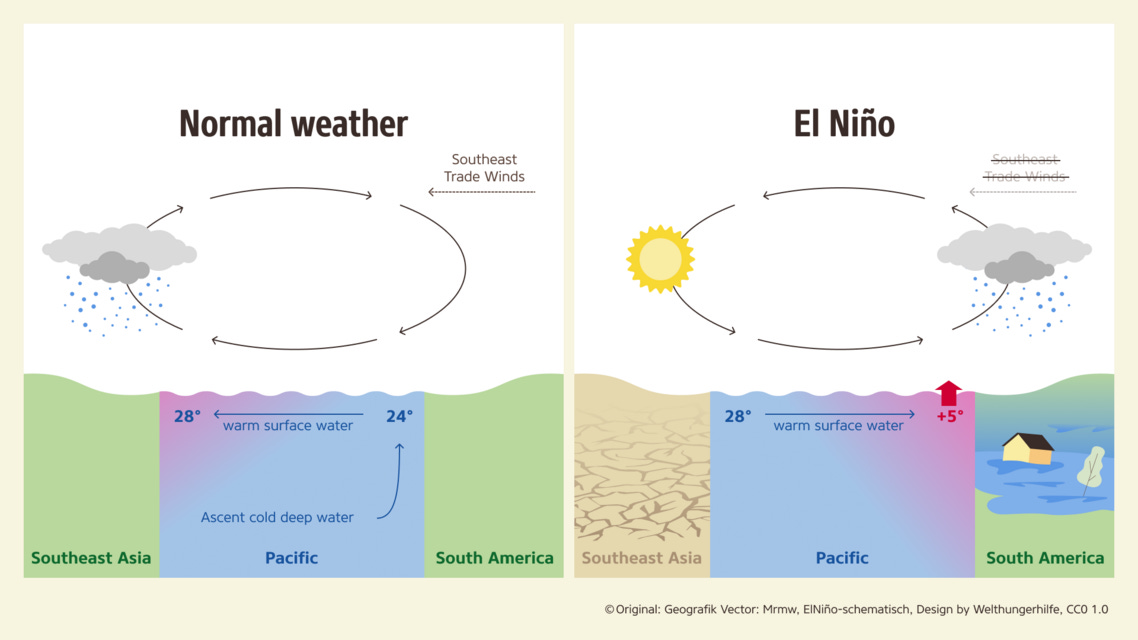
Usually, the heat that El Niño pumps into the global atmosphere leads to a milder first half of winter in Europe. So far, good news for Europe. Yet, because it affects the flow of the jet stream, it can lead to severe and unusual cold snaps later in the winter. Worse, this El Niño is unprecedented in scale. A moderate or normal El Niño anomaly might involve temperatures that are 1.0 to 1.4 degrees above normal. A strong El Niño might involve temperatures as much as 2.0 degrees above normal. Below the ocean surface, temperatures are being recorded that are a staggering 10 degrees above normal. These shatter records. The National Oceanic and Atmospheric Administration of the US Department of Commerce predicts a 95% chance that El Niño will fall into the ‘very strong’ category (above 2.0 degrees centigrade anomaly), and a 69% chance that it becomes the strongest El Niño recorded since tracking began in 1950.
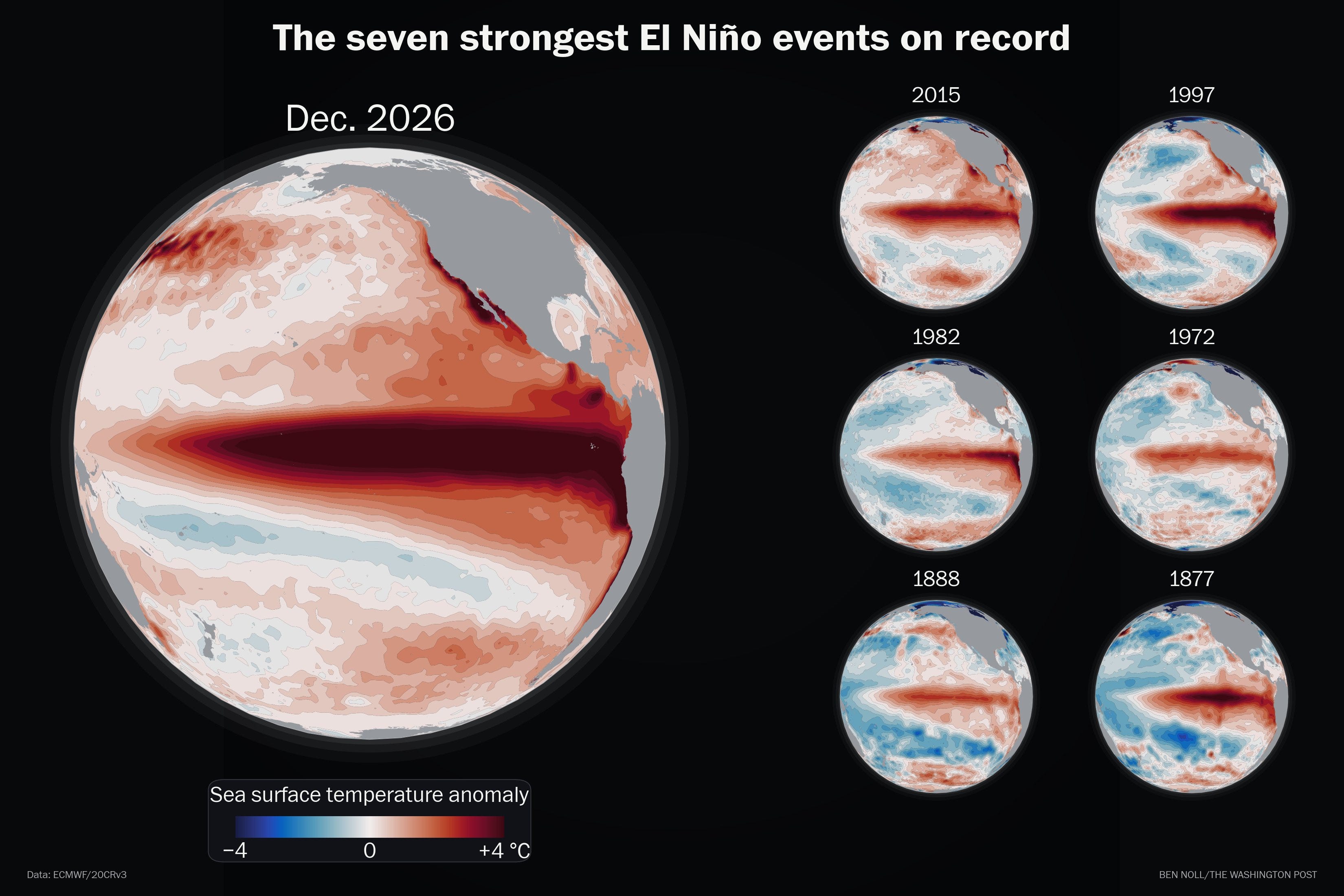
While Europe is not directly affected, this might suggest that Europe could be saved by an unusually warm winter. Nevertheless, Rystad Energy, one of the world’s leading data, analytics and strategic consultancy firms in the global energy sector, estimates that Europe would require a winter fully 2 degrees warmer than the average in order to attain normalised energy supply throughout the winter given current reserves. It cautions that that has only happened in December 2015 and February 2024. Even a winter that was on average 1 degree centigrade warmer than normal, Rystad contends would still leave Europe needing to buy “at least 7 Million tonnes [of LNG] more than it imported in the prior winter” due to the lower reserves this time around.
Worse still, weather and atmospheric systems are not linear. As aforementioned, El Niño affects the jet stream and disrupts the Polar Vortex, frequently dumping brutally cold, dry Arctic air into Europe. As we have seen in Scenario 2, such events would rapidly deplete Europe’s thin reserves. Given this El Niño looks as though it will be unprecedented in scale, who knows what effect a butterfly of that size flapping its wings will have on the distant European weather?
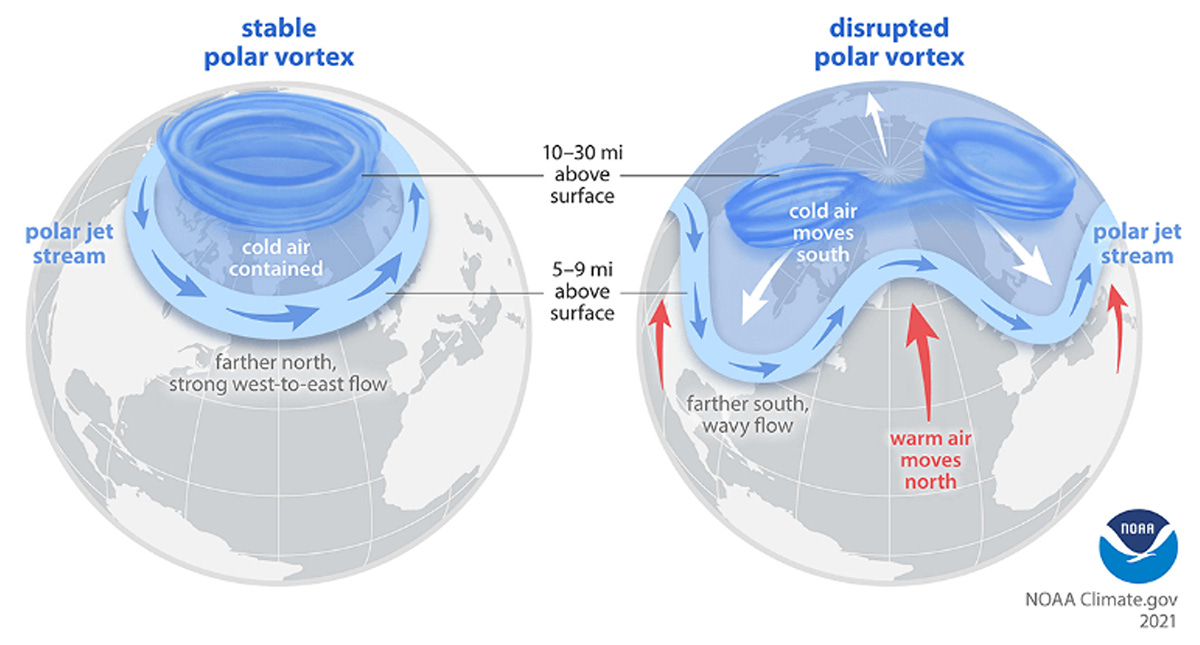
The main issue for Europe now is that serious energy problems are already baked in as a baseline scenario for the coming winter. Scenarios involving a worse than normal winter (N.B. worse case scenarios, not worst case) do not create the crisis: they make it more extreme. Domestic and pan-European political interactions have produced a series of policy decisions that have layered one on top of the other to lead the continent to this position. The closure of nuclear in some countries and failure to replace an aging fleet in others. Trading Russian gas for more expensive and volatile LNG. The demolition rather than mothballing of coal power plants. The push for renewables. Long-term fiscal policies that have left little room for manoeuvre in times of crisis. All of the above have left Europe dangerously vulnerable to energy crises. Now, the continent’s leaders find themselves navigating a period of exactly the type of geopolitical friction that makes such crises more likely: the Ukraine war; the Iran War; the loss of Qatari LNG; global increases in sovereign bond yields; trade logistics breakdowns.
If Europe is to survive this winter unscathed (as is possible), it would be a matter of blind luck – a gift from the weather gods. Negative economic effects, inflationary pressure, further dented industrial competitiveness, and a temporary hit to living standards is now the baseline for this winter. But it could be so much worse. A mild start to the winter might cause felicitations among Europe’s nervous elite, only for cold snaps later to whiplash the prevailing mood into panic. Furthermore, this is not only a theoretical exercise: it is likely to have concrete geopolitical effects. A real energy crisis would affect Europe’s global standing in the long run, but in the short run, it would immediately worsen its negotiating position vis-à-vis Russia, the United States and even China, while risking a full rupture of the continent’s already fraying socio-political fabric.
To be forewarned is to be forearmed.
As you can probably imagine, the research for analyses like this takes a great deal of time and effort. Collating it and writing it up to a high quality takes no less. Please therefore consider getting a paid sub to support our efforts. It only costs the equivalent of a couple of pints in a pub a month, and gets you a couple of articles of this depth and quality a week, on average. Plus, as a bonus, paying subscribers gain access to the secret club that are our premium podcast episodes, and the entire back catalogue of premium podcasts. That’s worth eight bucks a month by itself. A belter of a deal, everybody agrees.
If you really can’t spare the price of two pints for a whole month’s content, then could do us a favour? Share this with somebody who would benefit from reading it. Or announce on social media how much you enjoyed it. Thank you in advance.
More content will appear on the Multipolarity Substack soon. Until then, farewell and good luck.
Great article.
It's worth noting that EU hydroelectric generation is also suffering. Reservoirs in the Alps and Nordic region have been depleted by hot, dry conditions.
Well, that's what you get if you decide to be more dependable on the weather gods. Totally predictable.
Climate alarmism and russophobia the 2 main nails in the european coffin. Self inflicting wounds, all to keep ys 'safe'.
But hey: you can always sell it as 'short time pain for long term gain', right? But that has an expiry date. The european 'leaders' have their priorities and toe the line, despite possible civil unrest. They can leave the stage at any time and get some nice position elsewhere. 'Mistakes were made...but not by me' as a sick joke..