
Multipolarity Brief — Eastern Approaches Special
The cracks opening in Ukraino-Polish relations offer a glimpse of Eastern Europe's geopolitical future, but not in the way you think.

During the last few weeks, a series of events has offered a hint of the future contours of Eastern European geopolitics. Yet, because these events do not fit well with the official narrative, they have garnered hardly any coverage in the mainstream English language media.
The story begins in mid-May, when Ukraine had the body of one Andriy Melnyk exhumed from his Luxembourg grave, returned to Ukraine, and buried with full state honours in a ceremony attended by President Volodymyr Zelensky. In early 1929, Mr Melnyk co-founded the Organisation of Ukrainian Nationalists (OUN), a far-right, fascist-adjacent movement with the explicit aim of creating an ethnically pure Ukraine. Later, after the onset of the Second World War, this group — including the faction Mr Melnyk himself commanded, the OUN-M — collaborated with the invading Nazi forces. Elements of the group directly participated in the Holocaust, and most were involved in ethnic cleansing and the genocide of Poles living in what is now western Ukraine. In the Volhynia Genocide, they killed over 100,000 Poles, the overwhelming majority of them civilians, often targeting the elderly, women and children, sometimes torturing them before death.
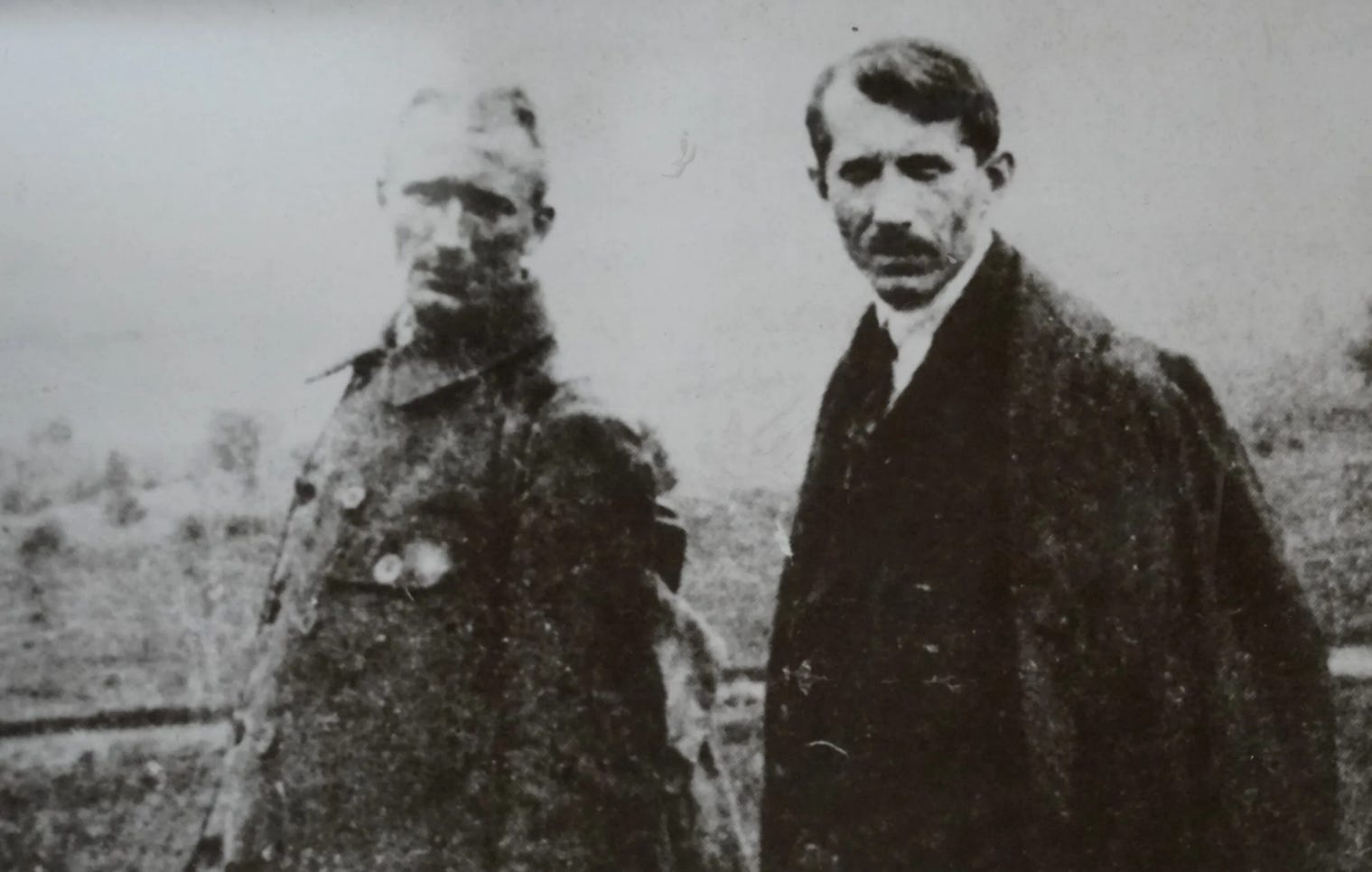
Andriy Melnyk, right, photographed with Yevhen Konovalets, who with Mr Melnyk co-founded the OUN.
Modern Ukrainian nationalists argue that the story of Mr Melnyk and the OUN is more complicated: that they were primarily Ukrainian nationalists and anti-Bolsheviks who simply wanted independence from Moscow’s yoke. They note that by the end of the war, elements of the OUN were fighting a guerrilla campaign against the Red Army and the Nazis. Ukrainian nationalists further highlight that many historical national heroes have chequered pasts (the Multipolarity Brief has seen Winston Churchill suggested as an example of this — a comparison bound to win friends in Britain). Nevertheless, the Polish government and much of Polish society was understandably touchy about Mr Melnyk and his wife receiving a state burial as national heroes of modern Ukraine.
Just days after the ceremony, the situation worsened when President Zelensky signed a decree awarding the honorary title “Heroes of the Ukrainian Insurgent Army” to a Ukrainian special forces unit. The Ukrainian Insurgent Army (UPA) was the armed wing of the OUN-B faction led by Stepan Bandera. Like Mr Melnyk, Mr Bandera was a far right Ukrainian nationalist leader who collaborated with the Nazis and was involved in genocide and ethnic cleansing, yet is now held up as a hero.
The spat between Kiev and Warsaw rapidly spiralled into something far more serious. Polish President Karol Nawrocki revoked Poland’s highest civilian honour, the Order of the White Eagle, from President Zelensky. Ukrainian leaders returned honours Poland had previously awarded them, while Zelensky approved legislation creating a “national pantheon” expected to enshrine Stepan Bandera and Roman Shukhevych — the chief architects of the Volhynia Genocide.
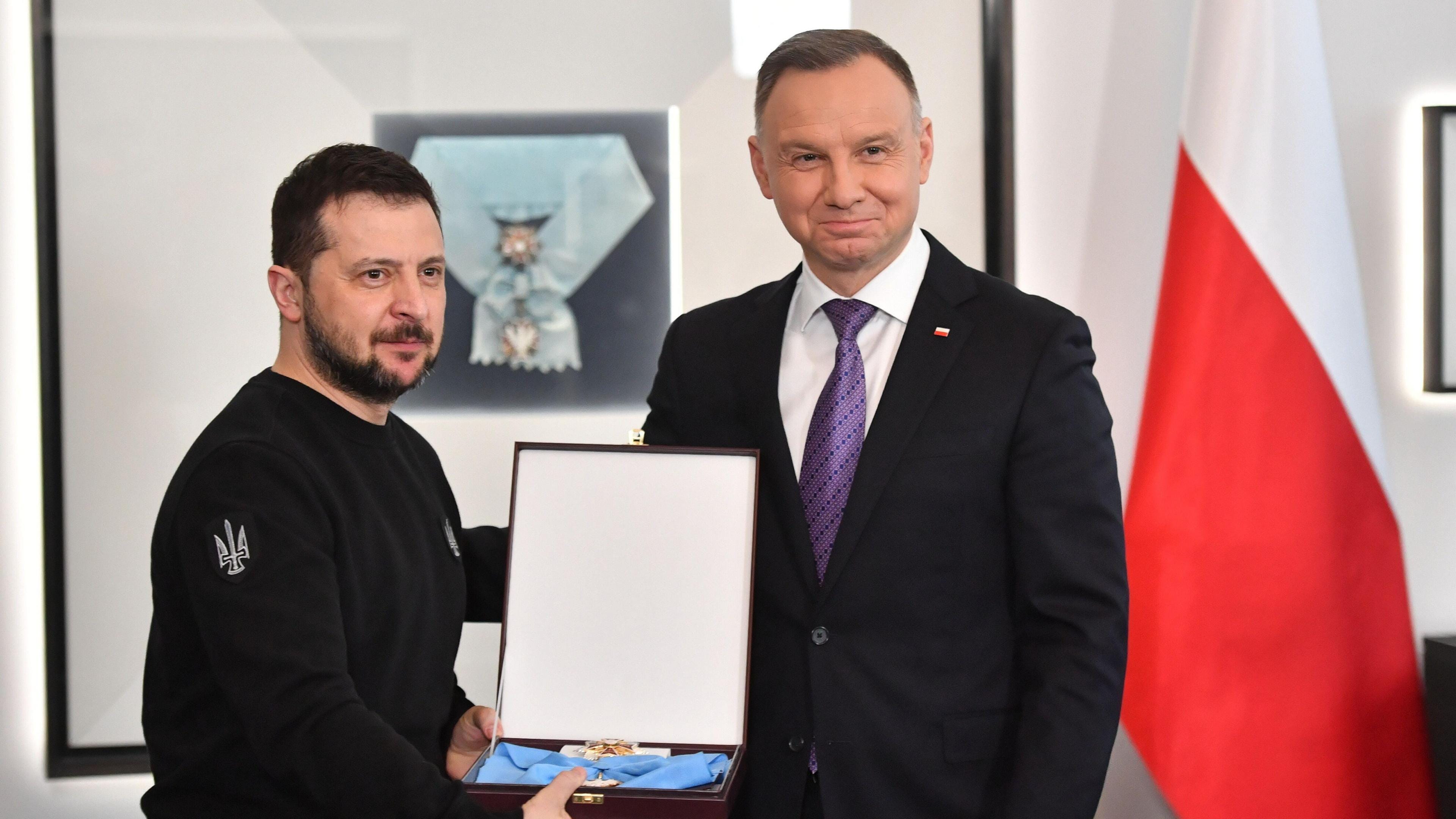
President of Ukraine Volodymyr Zelensky, left, receives the Order of the White Eagle, Poland’s highest honor, from then-President of Poland Andrzej Duda on 5 April 2023.
The Multipolarity Brief does not wish to pass judgement on this matter, and a full historical reckoning lies beyond the scope of this article. For those interested in learning more, we recommend the Substack of Andrew Korybko, an American-Polish geopolitical analyst. His work detailing the unfolding diplomatic imbroglio between two of Europe’s most nationalist states has been highly valuable. Crucially, Mr Korybko points out that the episode is acting as a catalyst for existing, slow-burning resentment toward Ukraine and Ukrainians in Polish society. Even before the war, millions of Ukrainian migrants and guest workers lived in Poland. Since the war began, millions more refugees have joined them.
Mr Korybko has also reported that many Poles have begun to resent what they see as Ukraine’s transformation into an anti-Polish state, despite Warsaw’s support for the post-Euromaidan formation of a Ukrainian national identity and the tremendous aid they have provided to Ukraine (nearly 5% of GDP, including much of Poland’s military stockpile and shelter and financial support for Ukrainian refugees).
But it goes further than popular feeling. Senior Polish officials have gone so far to describe Ukraine’s recent actions related to the OUN as proof of civilisational incompatibility, likening the cult of these Nazi collaborators to Russia’s veneration of Stalin in Polish historical memory. The former President of Poland and Nobel Peace Prize laureate, Lech Walesa, has removed the Ukrainian flag he was wearing on his chest, announcing that “by honoring the UPA bandits, the President of Ukraine has insulted me and all of our compatriots who were murdered.” Even the pro-EU, more globalist-liberal government has been forced to take a stand, given how the conservative-nationalist opposition has been able to gain so much political capital out of the issue.
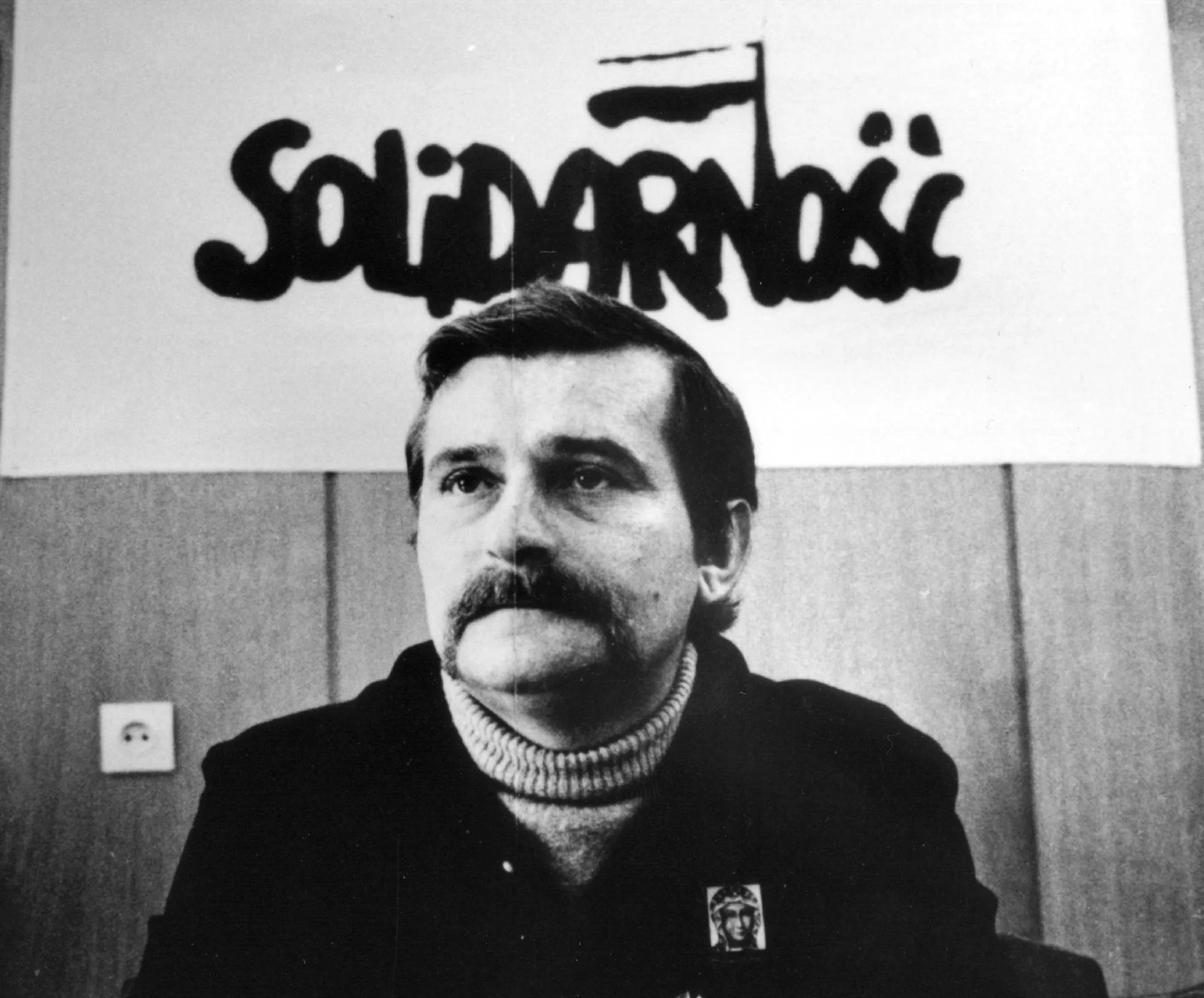
Lech Walesa, who led the Solidarity movement against Poland's communist regime, greatly precipitating the end of the hard Soviet sphere of influence in Eastern Europe. From 1990 until 1995, he was President of Poland.
The Multipolarity Brief does not believe this will lead to an outright rupture between Poland and Ukraine. However, it does offer a glimpse of what the post-Ukraine War geopolitical environment might look like on Europe’s Eastern Approaches. To tell that story, we must set the matter against Poland’s perennial geopolitical predicament.
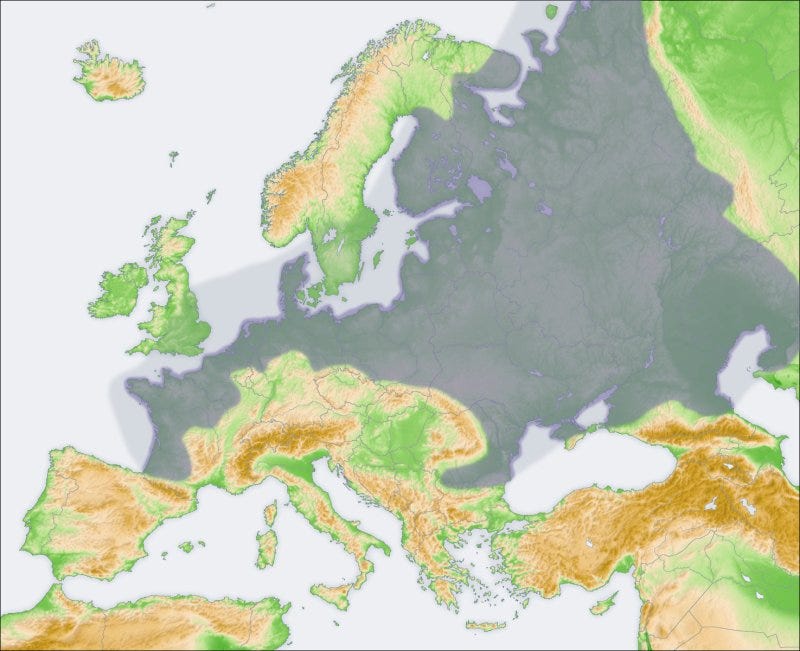
The North European Plain. A flat geographical feature that stretches from the Atlantic to the Urals. It offers little in the way of defensible features after the River Rhein, and widens massively toward its eastern end.
Poland sits near the wide and open eastern end of the North European Plain, a broad, largely featureless corridor between the Carpathians and the Baltic that has historically offered invading armies few natural obstacles. Sandwiched between Central and Eastern Europe’s two historically dominant powers — Germany to the west and Russia to the east — Poland has repeatedly found itself as an arena in which larger forces contest supremacy. Its history of forced partitions, beginning in 1772, its temporary erasure from the map, and its postwar reconstitution as a westward-shifted Soviet satellite state designed to serve as Moscow’s forward buffer, left deep scars on the national psyche. These experiences produced a national security mentality acutely attuned to the raw mechanics of power in a way that is often beyond the comprehension of more geographically insulated states such as Britain and the United States.
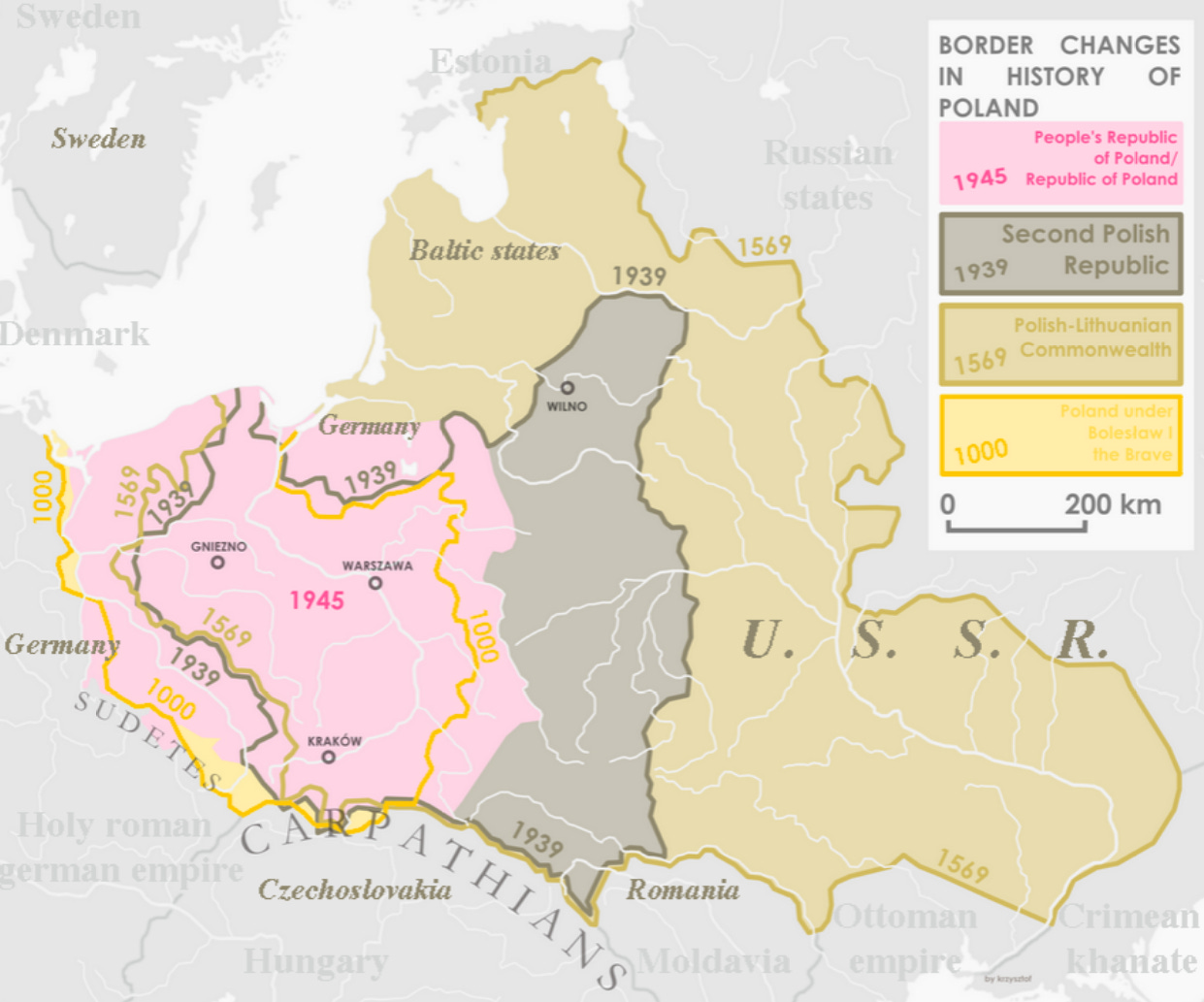
Poland’s dramatically shifting borders through history.
After the Soviet collapse (1989–91), Poland pursued two parallel tracks to escape its historical vulnerability. NATO membership in 1999 brought it under the American nuclear umbrella and facilitated the modernisation of its armed forces at a moment when the former Soviet states lagged in technology and modern warfighting practice. Meanwhile, European Union accession in 2004 integrated its economy into German-led supply chains and delivered substantial investment and structural funds, paving the way for strong economic growth. By these means, Poland negotiated the 1990s and 2000s far more comfortably than Russia or many other post-Soviet states, and has come to be seen as one of Europe’s star pupils. Barely a week passes without the UK financial press noting that, on current trends, Poland will soon overtake Britain in GDP per capita.
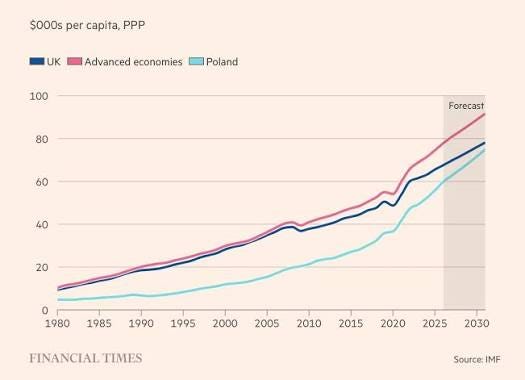
Source: The FT, the IMF. Poland, on current trends, will overtake the UK on GDP per capita at some point in the 2030s.
Yet Warsaw never forgot its history — or its geopolitical realities. While Poland has used Germany and the United States as a shield against Russia, and remained implacably opposed to the latter, it has resisted full integration with Germany (via the EU) in a way the Netherlands, Czechia or the Baltic states have not. For example, Poland has retained its own currency, the zloty, rather than adopting the euro. It has also helped to build the Visegrad Group (comprising Czechia, Hungary and Slovakia in addition to Poland) to amplify the voice of Central European states against Franco-German dominance in Brussels.
Warsaw also led opposition to the Nord Stream pipelines, correctly identifying them as vehicles for deeper Russo-German economic interdependence — the eternal nightmare of Polish strategic planners. Under the conservative Law and Justice government (2015–23), the country sought to reassert sovereignty over its judiciary, a key tool through which Brussels (and by extension Germany) has influenced EU member states. Taken together, these choices suggested that, once protected against Russian revanchism, Poland preferred balancing rather than full bandwagoning.
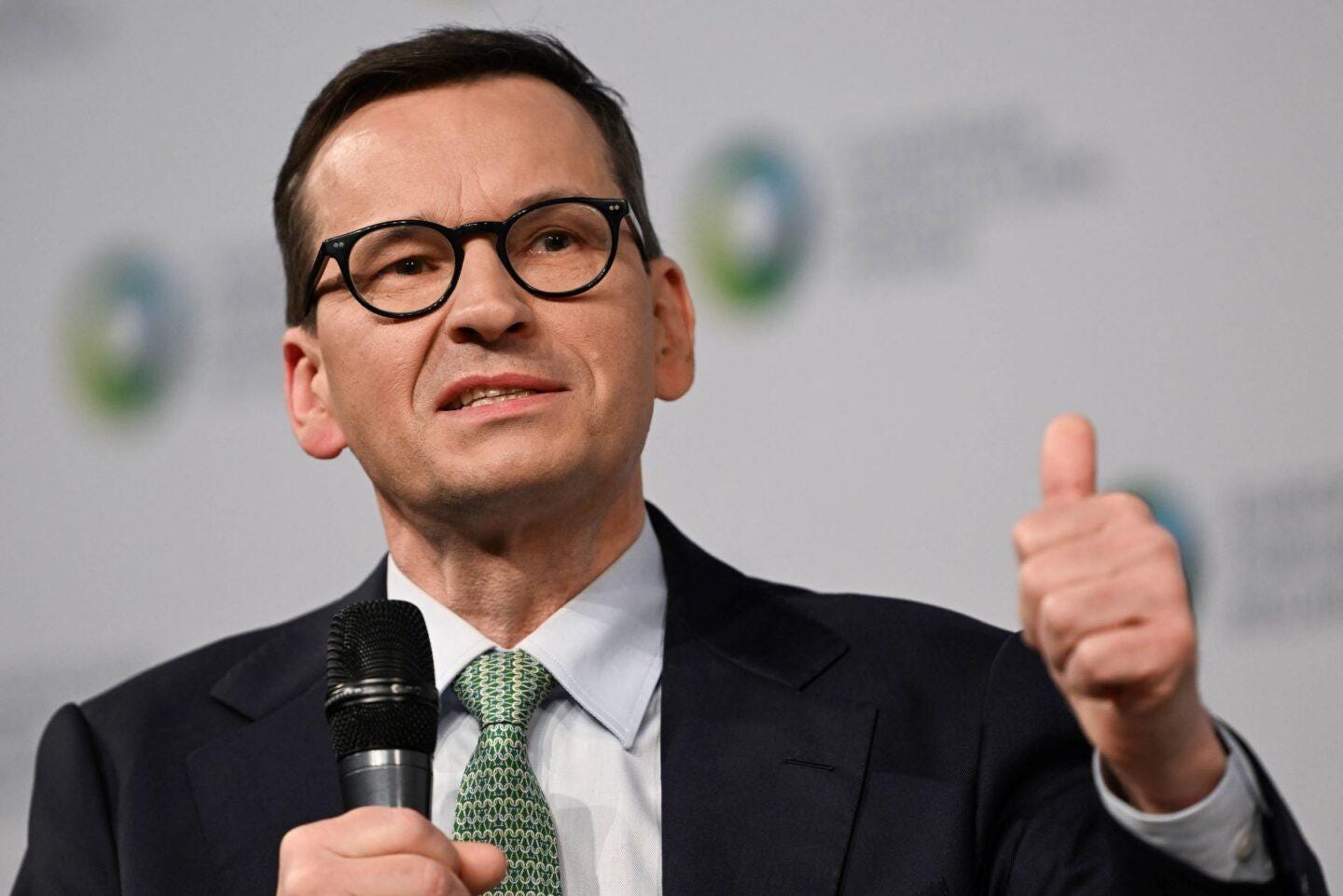
Mateusz Morawiecki, Prime Minister of Poland, 2017-23, for the Law and Justice Party.
As the world order shifted from unipolarity to multipolarity, Poland refined this strategy further. The Ukraine conflict was leveraged to cleave more closely to Washington — the only external power capable of guaranteeing Polish sovereignty against either or both of its great-power neighbours. Exports to the United States surged, and Polish diplomacy has positioned the country as Washington’s most reliable partner on the eastern flank.
At the same time, Warsaw revived elements of the interwar Intermarium concept. Conceived by Józef Piłsudski, the Intermarium was an effort to use the collapse of the German and Russian empires after the First World War to reconstruct something like the old Polish-Lithuanian Commonwealth — a multinational federation with the economic (and thus military) power to secure independence from the inevitable recovery of the two 800-pound gorillas that bookend Central and Eastern Europe. The original plan failed, but the modern version may stand a better chance by focusing first on economic integration.
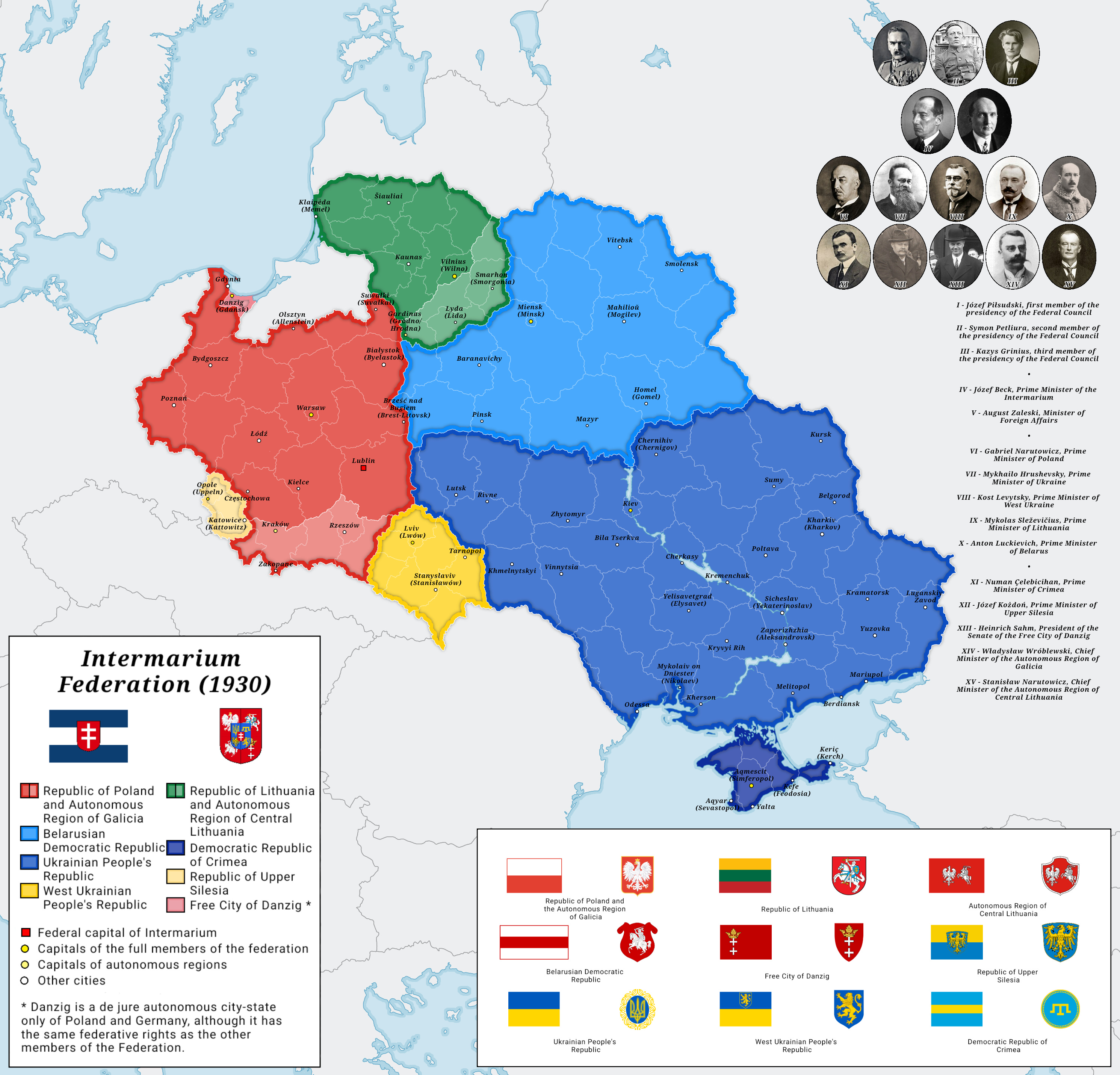
The Intermarium concept, to create a federal union of nine states in 1930.
The Three Seas Initiative is a North-South infrastructure project involving the expansion and upgrading of motorways, gas interconnectors and rail links. It aims to reduce East-West logistical dependence and create a more cohesive economic space stretching from the Baltic to the Adriatic and Black Seas. American investment, including recent commitments to energy infrastructure, has reinforced the initiative’s strategic character. It is very much an Intermarium for the 21st century.
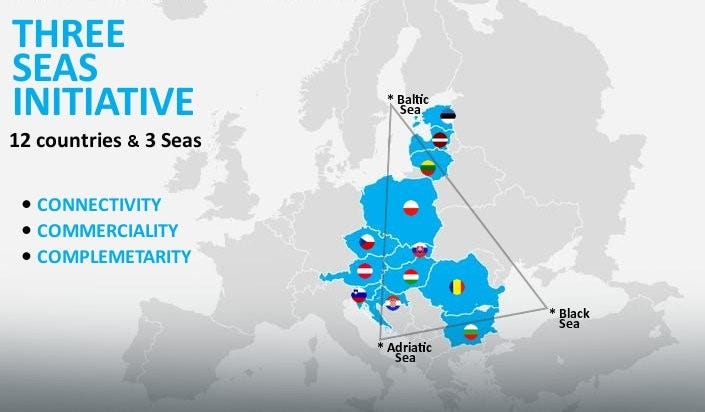
The geographical likeness of the Three Seas Initiative and the Intermarium are even more apparent if much of Western Ukraine was included.
Poland’s military posture has undergone the most visible transformation of any nation in Europe. Plans unveiled before the full-scale war — and accelerated by it — call for a dramatic expansion of land forces, with major acquisitions from the United States and South Korea rather than traditional German suppliers. If realised, these programmes would make Poland the second-most powerful land army in NATO after the United States and potentially the strongest on the European continent.
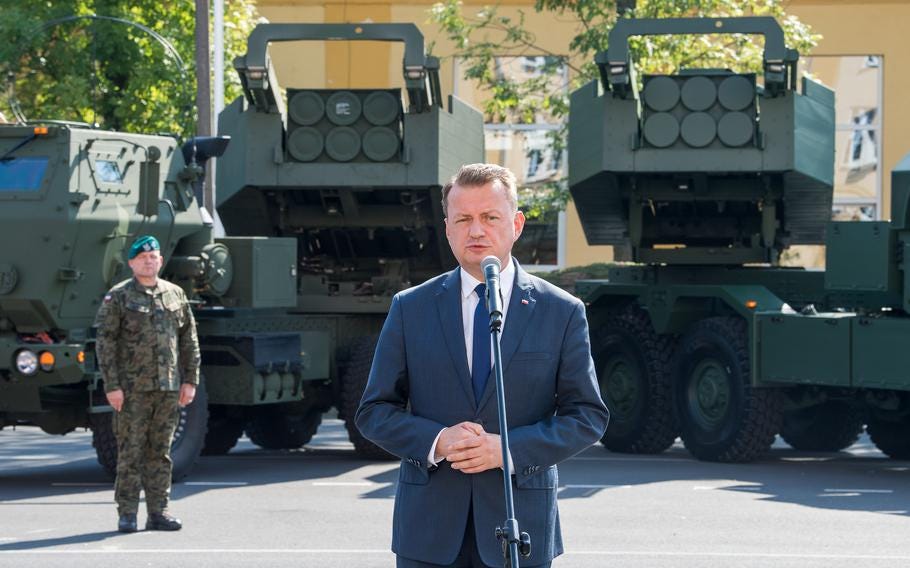
Then-Defense Minister of Poland Mariusz Blaszczak at a ceremony to mark Poland signing a deal to purchase of hundreds of HIMARs multiple-launch rocket systems from the United States, 11 September 2023.
Since the Civic Coalition, led by former EU commissioner Donald Tusk, defeated Law and Justice in the 2023 elections, Poland’s stance has shifted somewhat. Like their fellow liberal, pro-EU ‘establishment’ parties across Europe, Civic Coalition prefers to cleave more closely to Brussels both as a source of security and of greater economic strength. While this often entails some loss of sovereignty, such thinkers view it as a price worth paying for deeper economic integration, security in numbers, and the enhanced influence the EU’s scale provides when dealing with partners and rivals.
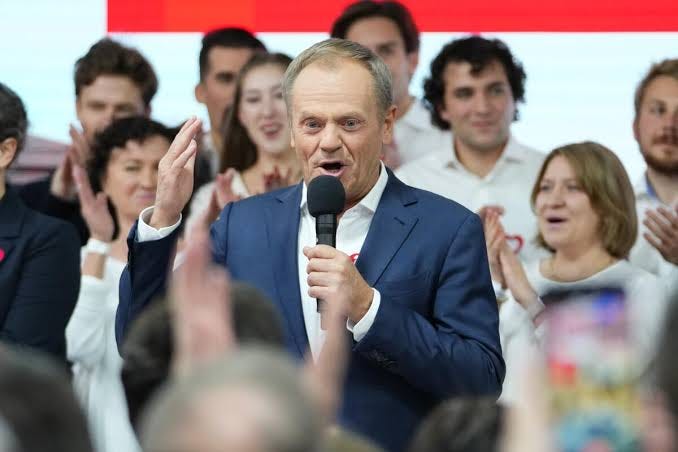
Donald Tusk wins election as Prime Minister in 2023.
Yet Poland’s view of Russia has remained unchanged. Its efforts to achieve energy independence (through shale exploration and pipeline connections to Norway) continue. Its rearmament programme remains largely intact. Its closer relations with the United States compared with most EU nations persist. In other words, Poland’s geostrategic realities remain constant, and political ideology cannot wish them away.
It increasingly appears that the United States will seek to draw down from the European peninsula. Military units are already leaving, and diplomatic and economic focus will likely follow. Contrary to popular belief, this is not a policy novelty introduced by US President Donald Trump. Powerful strategic forces are pulling Washington away: China is now so formidable that the struggle for mastery of the Western Pacific will consume the bulk of America’s economic and military power. The United States can no longer afford to act as first responder to every European security issue or maintain forces on the continent sufficient to act as a credible deterrent on its own.
When and if it does leave, however, Washington will not forswear all strategic interests in the Old World. It will still want to maintain influence on the continent and, above all, to ensure that Europe’s vast wealth, consumer markets and engineering and technological expertise do not link up with Russia’s natural resources — and thence with China. Such an outcome would represent Washington’s worst geopolitical nightmare. It would seem to make sense for the United States to therefore attempt to leave behind ‘blocking forces’ as it withdraws. These would take the form of a select few countries capable of physically and diplomatically preventing future Russo-German (and thus EU-Eurasian) integration, while also providing the US with a potential land bridge onto the continent if needed.
Poland would appear to fit this bill — and Warsaw certainly shares strategic synergies with Washington on the matter. Its geographical position on flat, open land between Russia and Germany makes outside support a strategic imperative rather than a luxury. Its rearmament programme is expensive, and the country is already running a hot economy with a budget deficit near 7 percent of GDP. Poland may therefore come to rely on inward investment to cover the gap. In this sense, it could end up importing capital and arms while exporting geopolitical utility.
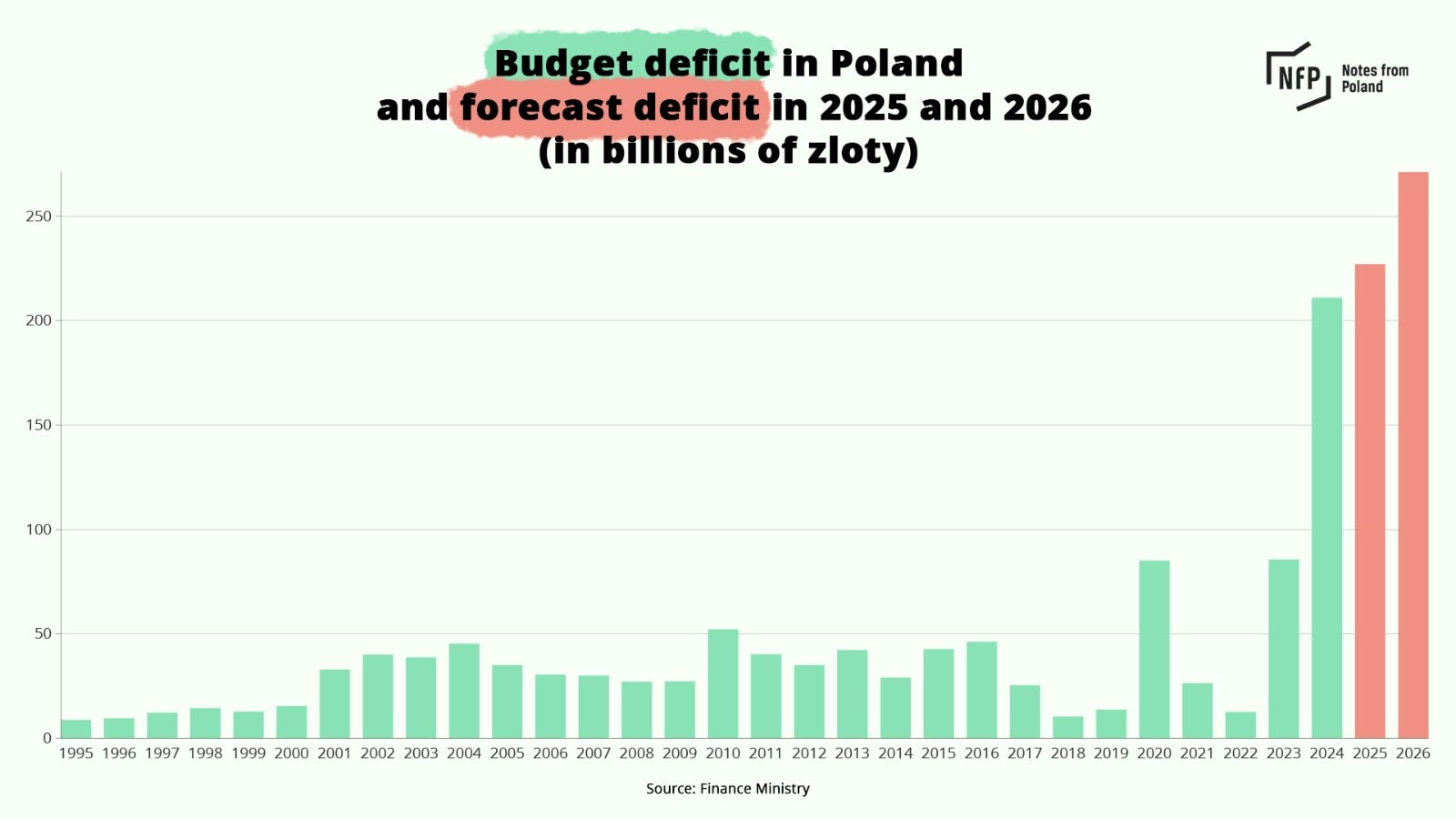
Source: Notes from Poland, Finance Ministry of Poland. Since Donald Tusk and Civil Coalition have regained power, the Polish budget deficit has blown up.
But what if Poland turns out not to be the most geopolitically useful state in Eastern Europe? There is, after all, another geographically expansive nation nearby that has a huge and battle-hardened army, a willingness to accept tremendous sacrifices to weaken Russia, a political class that is tightly connected with (and reliant upon) its American and Western European counterparts, and whose geopolitics align closely with those in Washington who seek to contain Russia independently of potential interference from Berlin or Brussels.
In this light, recent announcements that Ukraine has secured mutual arms-manufacturing agreements with the Baltic states, Finland and Germany — as well as a Patriot system manufacturing licence from President Trump — should be seen not merely as a means to produce more weapons for the current fight against Russia, but as a way to shape the post-bellum geopolitical reality. A reality in which Ukraine, rather than Poland, becomes Western Europe’s and Washington’s premier tool for containing Russia.
Andrew Korybko has reported that Polish strategic thinkers are waking up to this possibility. After the war, Warsaw would wish to play a large role in rebuilding a weakened Ukraine, and by this means push its sphere of influence deep into its former Galician territories and ideally as far as the Black Sea. Instead, Warsaw faces the possibility that old ethnic enmities between Poles and western Ukrainians begin to re-emerge, destabilising relations between the two countries, even as Ukraine attempts to usurp the geostrategic role Poland had hoped to carve out for itself vis-à-vis the great and regional powers to its west.
In the OUN-Melnyk affair, and the deterioration of Ukraino-Polish relations it has precipitated, we are not witnessing a fissure that might crack the European alliance against Russia. (Indeed, while the war continues, a lid will almost certainly be kept tightly on intra-Eastern European relations.) Rather, we are seeing a glimpse of the strategic contours of Europe’s Eastern Approaches ten years hence. It is a future in which Poland seeks to keep Ukraine close to expand its sphere of influence — or at least as a useful buffer between it and Russia — even as it competes with Ukraine for geopolitical influence and has to manage historical enmities which will have more freedom to burn absent the unifying war against Russia.
Until the clouds roll in a little
Be honest, how much analysis of this depth and perception do you read elsewhere? Try to answer. Perhaps it’s time to show your love and get a paid sub to support our efforts. It only costs the equivalent of a couple of pints in a pub. And, as a bonus, paying subscribers get access to the secret club that are our premium podcast episodes, and the entire back catalogue of premium podcasts. That’s worth eight bucks a month by itself. A belter of a deal, everybody agrees.
If you really can’t spare the price of two pints for a whole month’s content, then could do us a favour? Share this with somebody who would benefit from reading it. Or announce on social media how much you enjoyed it. Thank you in advance.
The Multipolarity Brief will return next week. Meanwhile, more content will appear here. Until then, farewell and good luck.
No need to sugarcoat it, Bandera and Shukhevych were mass murderers and war criminals of the worst kind. Despite being "subhuman" in the eyes of their on-again off-again German patrons, they nevertheless had an active symbiosis in their mutual desire to eliminate other ethnic groups.
They looked upon Poles much the same as the Germans looked upon them.
While the relationship of Poland with the Ukrainian-nationalists is an alliance of convenience, nationalists are historically pragmatic when it comes to which paths are available to them in their rise to power. As long as both see the US as the most powerful player, they will kiss that particular ass together in order to advance their cause.
The real post-war situation that is of interest, in my opinion, is that this decade+ dalliance with the ultra-right injects a new generation of fascism into Eastern Euro politics. At the same time as Liberals and SocDem's are thoroughly discredited all across the continent.
Poland's economic miracle and survival of the 90's is also due to it being on the fringe, need to hem in Russia. ditto Japan and South Korea, Turkey, Greece and Italy in former times. Now not needed so much - look at them! Post-SMO, I suspect Ukr will be a buffer area, not a State. It will be a depopulated no mans land.